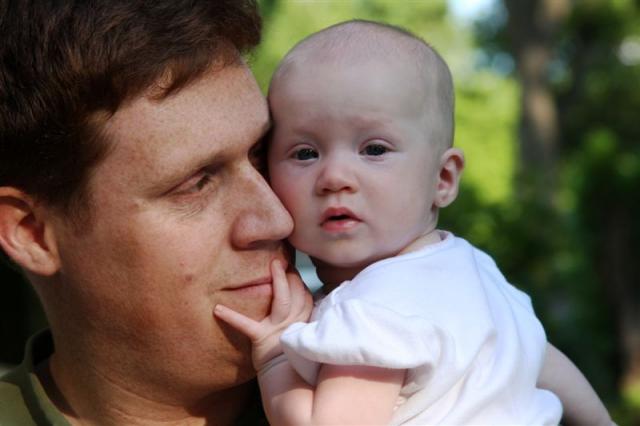
 June 26: Happy birthday yesterday, Maretta! We missed spending the day with you:)
Last night, Sylvia did a three-hour stretch and two two-hour stretches of sleep. Soooo much better than waking up every hour from 2am to 6am. So much better. That and I went to bed at 8:30 or 9 pm last night, so I woke this morning feeling like a much perkier person.
I’ve been trying to upload photos from Andrew’s birthday and the days preceding, but it’s been my record-slowest upload ever. I picked out the pictures. Got interrupted. Set the pictures to upload. Got interrupted twice. Uploaded one set. Interrupt. Upload second set. Interrupt. Add captions to one… you got the story. So this morning, I was able to finish adding captions, and I’m posting this while Sylvia is in her exersaucer watching Andrew who is making matches of his memory cards.
Some good pictures in these sets. Enjoy!
Andrew’s birthday party
The days preceding Andrew’s birthday.
Sylvia is rolling
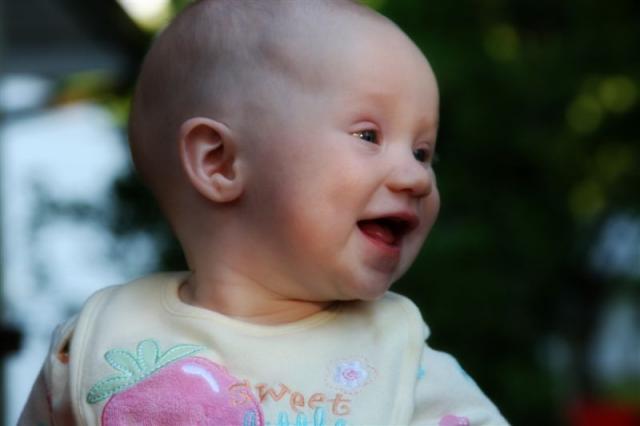 June 24: Sylvia rolled a couple weeks ago, but it wasn’t until this past weekend that she really got the hang of it. At one point on Andrew’s birthday, she rolled over about 10 times in a row. She’s been sleeping in a “snuggle nest” infant bed that helps the great-big crib feel a little more cozy for a little tiny baby. But last night, she was rolling around and got herself all cock-eyed. So I took down the play-silk canopy I had hanging over the crib and took out the snuggle nest, and tonight she’s sleeping in the full crib just like a big (?) girl.
The little one has been rather unhappy the last couple days. I think her teeths are bothering her. She’s also been continuing to wake up every hour or two all night long. It’s just not cool. But she doesn’t believe me. Or speak English.
Our boy is three!
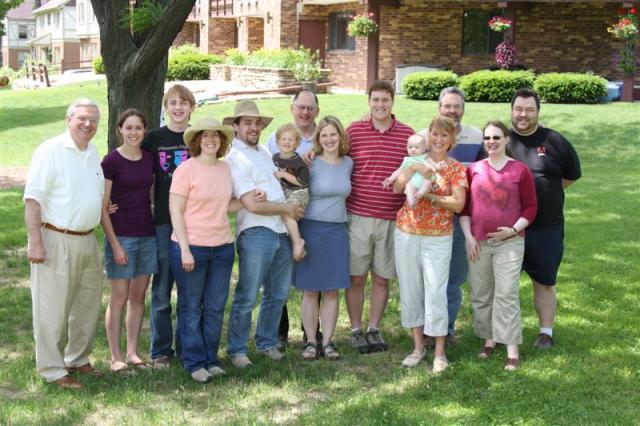 June 24: We sent Granny Lu home today after a really nice visit here the last several days. She and Grandad arrived on Thursday night, and we had a fun time together celebrating Andrew’s third birthday. On his actual birthday on Sunday, we had a great time at Wingra Park with my family and Sarah and Wes and Bryan’s parents. Andrew is officially three now! Pictures are in the gallery.
A couple good recent comments by the young man:
Breakfast conversation with his dad:
Bryan: Andrew, please eat the crusts of your bread, not just the middle
Andrew: I don’t want to eat my crusts.
Bryan: Well, you know, you need to learn to eat your crusts because grown-ups eat their crusts.
Andrew: Am I a grown-up?
Bryan: No, not yet.
Andrew: Then I don’t need to eat my crusts yet.
*gotcha!*
On our way to a party, Andrew is in his carseat talking to himself:
“This party is going to be a yiddle bit fun. (pause) Not a LOT of fun. A yiddle bit fun.”
Andrew’s word of the week is (unfortunately) “boring.” He’s decided that many things are boring. We’re part way through a book, and he wants to stop because it is boring. We’re watching a DVD, and he informs us that it is boring. Since when did he become so worldly? Maybe since he’s three!
Ooooo a new camera!
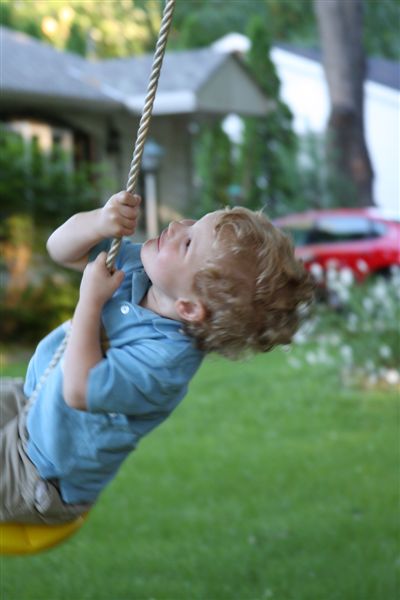 June 21: I am the very lucky owner of a new camera. A snazzy SLR with which I can do all kinds of need photography actions. I get a little tight in my throat just thinking about how cool it is:) It’s a gift from Terry, and I’ve been voracioulsy reading all I can about photography and Photoshop. My new way of keeping my brain engaged and expressing my creativity is going to be photography. And while I tend to take a dozen or so pictures each day on my point-and-shoot camera, I think I’d like to learn how to take really nice portrait pictures of the kiddos in my life.
I don’t want to decrease the number of snap-shots that I’m taking, so I’ve decided to kind of segregate the pictures I take with the SLR onto a new Flickr site. I plan to post my pictures that have some degree of artistic merit to the Flickr site, so feel free to check it out.
Lots of fun + lack of sleep = fewer posts
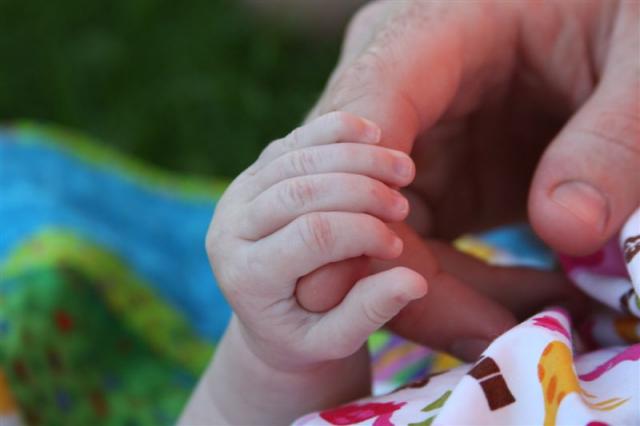 June 21: Since I started staying home, I’ve been posting pretty frequently, so I was kind of surprised to note that I hadn’t done a post in a full week. Part of the issue is that Sylvia hasn’t been sleeping well. She’s back to waking up every 1-2 hours at night and hasn’t been napping during the day. Andrew hasn’t been napping at all either, and that has left me with little time or energy for logging on to the computer!
But despite our lack of sleep, we’re also having lots of fun. Bryan’s parents came into town on Thursday, and we’re having a good time enjoying Andrew’s last days of being two. Tomorrow he turns three!
Pictures that I uploaded earlier in the week are in the gallery.
Rain and sun
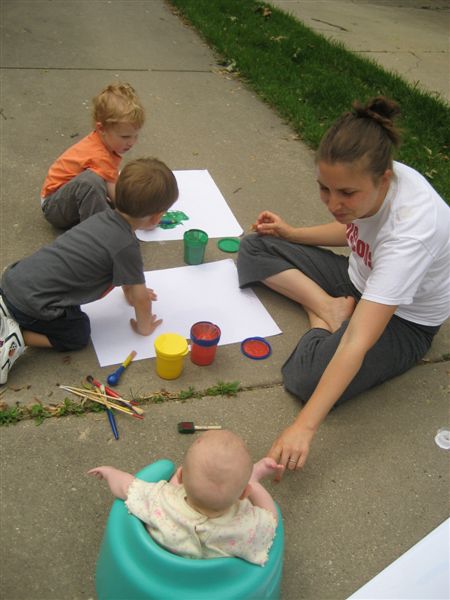 June 13: The good news – our basement didn’t flood again last night. We had some major down pouring, but the ground must have un-saturated enough over the last few days to give our old concrete basement walls a chance to hold back the flood. We had a nice week – a great picnic with Kathy and Alivia and Rayna at our local park, playtime with Jessica and Eli and Celia, and today we’re going to see Pam and Clara. Pictures from the last several days (including some baby-in-the-bath pics) are in the gallery.
Good times
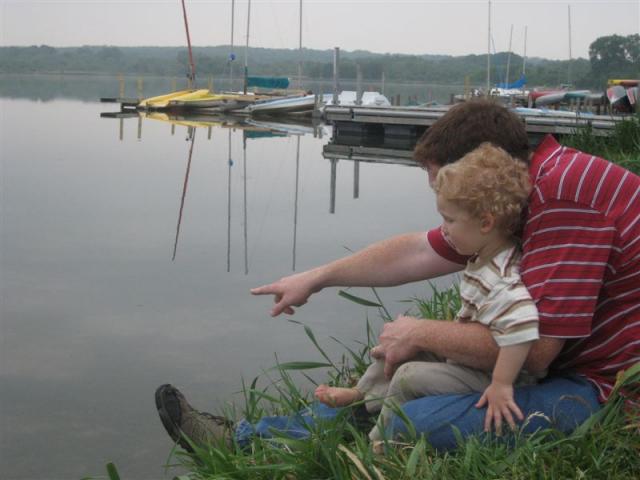 June 11: We had a lovely day yesterday! After many days of rain, I was ready for a sunshiny day. The weekend and Monday were a little rough sleep-wise. Sylvie kinda stopped napping during the day, and she decided to wake up every hour and a half or two hours at night. On Monday, I felt really fuzzy and groggy and unable to finish thoughts or be particularly coherent. Tuesday, though, we went with Kathy, Alivia, and Rayna to our neighborhood park where we played and picnicked for over five hours. I had no idea so much time had gone by. THEN, both children slept at the same time for nearly two hours. This really hasn’t happened before. 45 minutes, 20 minutes…possible. But an hour! Two! Oh, bliss. I let Sylvie sleep on my lap for the first hour. These days I don’t let her do that much because I don’t want her to need to sleep on my lap, but I really wanted her to sleep. Then for the second hour of her long nap (the longest in days), I was not doing anything for either child. It was amazing.
Last night, I was home alone in the evening and both kids went down smoothly. Sylvia didn’t nurse from 8pm until 3:30 am. I slept from 11pm until 3:30 straight. Oh delicious REM sleep. It does so much for a person’s mental health. Over four hours of continuous sleep was just what the doctor ordered. In fact, when she got up again at 4:30, I couldn’t fall asleep afterwards because I felt so very rested. I wanted to get things done!
Today we’re planning to hang out with Jessica, Eli, and Ceila. The weather seems promising again. Should be a fun, fun day!
Andrew is currently negotiating with me to go “All by myself to JabaCat.” (really Java Cat).
I said, “What if someone sees you riding alone to JabaCat and says, ‘Little boy, where is your mother?'”
Andrew said, “I would tell them, ‘She’s at home!.”
He’s now saying, “I’m getting ready…I’m ready to go. I can put on my shoes all by myself.”
I think I may need to intervene here.
Wedding photos for your printing pleasure
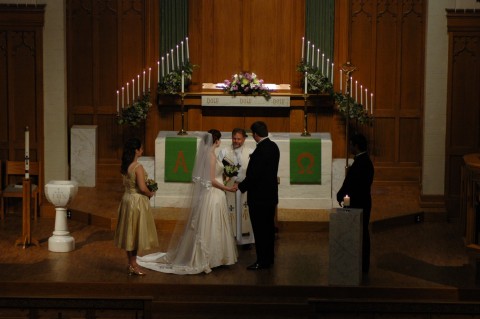 May 8: We recently received the digital version of the photos for Maretta and Kyle’s wedding. I’ve uploaded the pictures to Walgreens.com, and you are welcome to log on there and print out any pictures you’d like. What lovely memories I have from that day!
Early June days
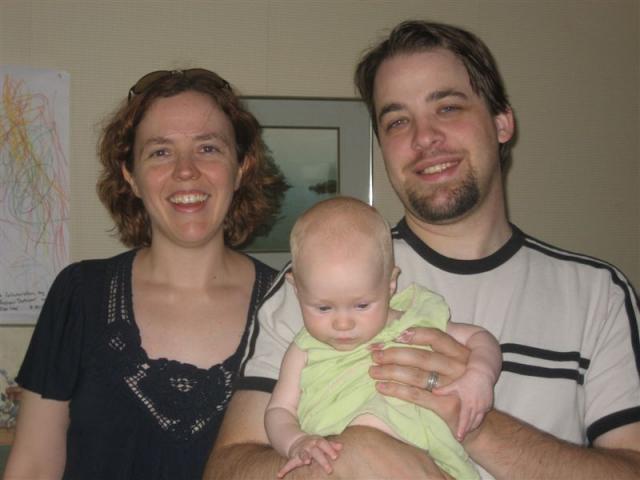 May 8: It’s been a good week. Pictures are in the gallery. We’re having some major rain events the last couple days. And Sylvia has been on an anti-nap jag, which is not OK. But in general, things are good.
I’ve been having fun reading a blog I enjoy, Pioneer Woman. She’s written up a thirty-some chapter recounting of the story of how she met and married her cowboy husband. As she says, “ Green Acres meets Harlequin Romance in my crazy, rip-roarin’ real-life tale of true love.” It’s been quite entertaining.
Last weekend Sylvia and I attended Becky’s high school graduation ceremony. The little one didn’t like the cheers or the cymbals crashing one bit, but in general she did a great job.
Last week we had a lovely evening at Lake Wingra next to Michael’s Frozen Custard. Andrew loved climbing all over the playground, and we all enjoyed a picnic, ice cream, frisbee and teatherball, and a walk down to the lake. Terry’s mom, Topsy, is visiting from Oregon, so we’re having fun seeing her.
On Thursday, Andrew, Sylvie, and I drove out to Jack’s house for a little overnight trip. We met Terry, Tom, Topsy, and Terry’s Aunt Rusty who is visiting from Minnesota. Andrew took me on an adventurous walk toward the woods as we hunted for a bear. The brambles turned us back, and we ended up trying to find purple treasure flowers (a.k.a. spiderwort) instead. That little kid has an amazing imagination. Andrew had a good time playing with Tom and getting read to by Topsy and Rusty.
Today, our friends Jessica and Mitch came over for lunch, and then we watched Eli and Celia while their parents went to look at a house around the corner that they are considering.
As I type, Sylvie is sitting next to me grinning and sucking on her hands. Andrew is raptly watching Monsters Inc. for the first time.
A nice, rainy Sunday evening treat.
Bryan’s first software ships
 June 5: Bryan’s been working extra-hard the last several weeks as he has been completing the first release of the software that he has been designing. He started at OpGen last September, and he’s really been enjoying it. You can see his blog post about completing the software here. He also wrote three posts describing what his company does on his blog, which I have posted below.
Here comes the science, Part 1
I’ve been wanting for some time to make a post or two to try and explain the basics of the science that is the core of our company. The techniques described here are in the public domain so there’s nothing secret here. I’ve been working here long enough that I now feel pretty confident that I understand the process at a fairly high level.. just the right amount to be able to describe it to someone else that might find it interesting. For part 1 here, I will just describe the basic premise and will cover more actual detail in later posts. I’ve really enjoyed learning this stuff and I hope that other people find it interesting too.
The “Op” stands for Optical
The company’s name, OpGen, is based on the fact that the core scientific process behind the business is called “optical mapping” which is, in short, a technique for taking physical samples of DNA and creating a visual representation of it such that unique organisms can be easily differentiated from each other and similarities between other organisms can be easily spotted. The whole concept is that you can break up DNA into many fragments and then put those fragments together in a line and you get what we call a “map”. What’s useful about this is that similar organisms will consistently and repeatedly break up in the same way such that their maps are very similar. As you’ll see later, these maps almost look like barcodes and you can actually think of them as such, or as a “fingerprint” which uniquely identifies an organism. Here’s an example of what one might look like:

What’s it for?
The most interesting applications for optical mapping that I am aware of are in the area of what we call “comparative genomics” (other people might call it something else). Basically, it’s the practice of looking at a number of similar or related organisms and analyzing what’s different about them. For instance, say you have maps of two isolates of the same species of bacteria that cause infections in humans.
Furthermore, say that one of those isolates is known to be extremely nasty and hard to treat, while the other is easily killed off with a round of antibiotics. By comparing the maps of these two bugs, you can actually see where the two are genetically different. Those parts that are different most likely indicate where the nastiness of the bacteria is regulated and can point the way for researchers to know where to look when trying to figure out how to combat that strain.
Coming soon…
In future posts I’ll tell you more detail about how we actually create those maps and talk about the software I’m working on and how it pertains to these maps.
Here comes the science, Part 2
This time around I’m going to dive down into a little more detail about what actually goes on in the process of making this optical maps of DNA samples. At a theoretical level, the process is fairly straight forward and sounds pretty basic. However, as I’m learning while working here, real life does not think very highly of our nice, simple, straight-forward theories. So the process has to be very robust, especially on the software side, which makes me very glad that I work with a lot of really smart people.
Making DNA lay down straight
The whole linchpin of this process is being able to measure the length of the strands of DNA (more accurately, the lengths of DNA fragments but we’ll get to that shortly). In order for length to have any meaning, we need to have the subjects we’re measuring be as close to a straight line as possible. In order to do that we use a glass surface (you remember those microscope slides you used in high school) and a cover slip that has microscopically small channels carved into it. The DNA is placed, in solution, onto this surface and, using a magical process I know nothing about, the DNA is stretched out along those channels which serve as guides for straightening out the molecules.
Cutting it up into fragments
In order to create meaningful maps that can be used to identify and compare organisms we need to break up the DNA molecules into fragments.
It’s these fragments that we measure to create that nice-looking barcode map. In order to create those maps you use what is called a “restriction enzyme”, which are enzymes that actually cut DNA. A particular restriction enzyme always cuts in the same place, at a particular occurrence of base pairs in the DNA strand. For example, the enzyme BamHI cuts at restriction sites of GGATCC. As an aside, most restriction enzymes cut at sites that are palindromic.. there’s no obvious reason that I know of why that is, but it sure is a neat coincidence. Due to the genetic makeup of different organisms, different enzymes will cut different numbers of fragments for each organism. Part of our process is picking an enzyme that will cut the “right number” of fragments, that is, enough to make a meaningful map.
Too few fragments or too many fragments often make the maps indistinguishable from each other.
Measuring those fragments
As part of the preparation of the DNA, a stain is applied that will cause the fragments to light up or “fluoresce” when exposed to a laser. The glass slip containing the DNA solution is placed on a fluorescent microscope that has a camera attached to it and an automated software system moves the camera up and down the length of those channels and takes pictures through the microscope. Here’s an example of what it looks like. Remember this is one tiny fraction of a single image from the microscope. You can see several broken strands of DNA. The colored one is one that has been picked out by the software as clean enough to be measured and recorded.

Hundreds of such images are acquired and finally fed through some image processing software that finds the nicest looking DNA molecules and it finds the fragments and measures their length in some unit of measure that is smaller than anything I can image. Finally those fragment lengths are recorded in order and they can be visually represented by that barcode-like display I showed last time. Here’s an artists interpretation of how that looks:

Assembling the pieces
Here’s where the real world comes in and whacks you in the head. DNA will almost never stay fully in tact throughout the process I just described. And even if it did, there are usually a lot of molecules and they tend to overlap each other or they don’t straighten out exactly right (or sometimes at all). So what you end up with is lots and lots of small maps that represent just a chunk of the entire strand of DNA.
And here is where some intense computing power is brought to bear on the problem as we take all of those smaller maps and try and determine how and where the overlap each other. It’s kind of analogous to trying to put a piece of paper back together after it has been through a shredder. When this process is finally done (and everything worked out okay) you end up with a “consensus map”, which is the amalgamation of
all of those smaller map chunks.

Once you’ve got that consensus map, then the doors open to a wide range of things you can do with it and that’s where the software that I’m working on comes into play. But I’ll save that stuff for the third and final installment of this series. Thanks for reading!
Here comes the science, Part 3
Before I went on hiatus it was just about time to talk about the software that I’ve been working on and how it pertains to the process of working with optical genome maps and actually doing something interesting with them.
Building a database
As I mentioned in previous posts the most interesting thing you can do with an optical map is to compare it to other maps of similar genomes for the purposes of looking at similarities and differences. But in order to do that you need a repository of maps and way of categorizing and searching that repository to find what you’re looking for. We didn’t have anything like that at the time I started so it was the first thing I worked on and we now have a nicely categorized, searchable database of over 40,000 genome maps.
Making maps in software
Creating optical maps is currently a time-consuming process and we’d need a lot of people to make 40,000 maps by hand. The vast majority of those maps that we have in the database are what are called “in-silico” maps, which is a cutesy way of saying that they were made in software. When you think about what mapping is, you’re taking little bits and pieces of DNA and cutting it up with an enzyme and then measuring the fragments that get created. We don’t necessarily know what the actual DNA sequence of that genome is and it’s actually irrelevant for the purposes of creating optical maps (which can be very helpful, which I’ll describe later). However there are plenty of people out there who are working hard at sequencing the genomes of all sorts of organisms.
We can take those sequences (the literal nucleotide sequence, e.g. ATCGGACT) and simulate the process of applying a restriction enzyme to cut that sequence into fragments to create in-silico maps. Luckily someone out there already wrote libraries for doing these sorts of things so it was pretty easy to use that code to populate our database.
Comparing maps
Really the critical functionality of the software I’m working on is the ability to compare maps to each other. In a nutshell we compare maps by looking at the series of fragments in each map and use some complicated math that I’ll likely never understand to figure out whether or not they’re “close enough” to each other to confidently say that they probably represent the same underlying DNA structure. While it’s very likely that the actual DNA sequences are different in some respects, those differences are small enough that they don’t show up at the map level. And we can reasonably assume that these are regions of similarity between the genomes. Using maps these similarities and differences are very easy to visualize.. here’s an example of a couple of similar strains of P.aeruginosa:

The purple parts are regions of similarity while the white parts represent regions that do not appear to be similar at all. It’s immediately obvious where these particular strains differ and where they appear to have common structure.
Extracting meaning
All of these leads up to my final point which is how you can use this software for comparing maps to extract meaning. As we know, the DNA structure of organisms dictates what they look like and what they are capable of in the physical world. In our particular realm we’re mainly looking at bacteria.. specifically bacteria that make people sick.
There are a lot of species of bacteria that make people sick and, within those species, there are several sub-species or strains that act differently. Some are particularly nasty, some are immune to certain antibiotic medications, and some are just run-of-the-mill . Since these strains are all of the same species they (frequently, but not always) end up sharing a lot of similar DNA. So by comparing maps of the different strains you can fairly easily see places where the DNA structure differs and that can really help you isolate the region of the genome that is cause a particular strain to be especially nasty.
I guess that’s about it for now .. this is getting pretty long. I may revisit this topic a little later as more code gets written and I start in on more new things. Right now I’m kind of in the middle of a round of bug-fixing and polish and that’ s just not that interesting!! Bye for now.